An Comhchoiste um Talmhaíocht agus Bia – Cruinniú an Choiste le BIÉ Dé Céadaoin, 10 Meitheamh 2026
Ábhar: Tionchar na nGlasbhealaí, na nIarnród agus na Bóithre ar an Talmhaíocht (Orduithe Ceannaigh Éigeantaigh Talún) [Atógáil]
Lorcan O’Connor, Príomhfheidhmeannach, Ráiteas Tosaigh
Réamhrá
Go raibh maith agaibh as an deis seo teacht os bhur gcomhair inniu chun páirt a ghlacadh sa phlé ar thionchar thionscadail na nGlasbhealaí, Iarnród agus Bóithre ar an talmhaíocht agus ar úsáid CPO chun talamh a thógáil. Táim in éineacht le mo chomhghleacaithe Geraldine Fitzpatrick, Ceann Chlár Caipitil BIÉ um Bóithre agus Glasbhealaí agus Mary Flynn, Bainisteoir Réigiúnach. Tugaim aitheantas freisin do na hionadaithe atá anseo ón nGníomhaireacht Bainistíochta Rialtais Áitiúil, ár gcomhpháirtithe seachadta i seachadadh na dtionscadal Bóithre agus Glasbhealaí.
Ar dtús, ba mhaith liom ról BIÉ a leagan amach maidir le bonneagar iompair a sholáthar. Comhlíonann BIÉ beartas an Rialtais mar a leagtar amach sa Phlean Forbartha Náisiúnta.
- Tá dualgas ginearálta ag BIÉ faoi Acht na mBóithre, 1993, soláthar gréasáin shábháilte éifeachtúil de bhóithre náisiúnta a dhaingniú ag féachaint do riachtanais na n-úsáideoirí uile. Faoi na Treoirlínte Bonneagair, is é BIÉ atá ina Údarás Formheasa do thionscadail agus oibreacha bóithre náisiúnta i gcomhar leis na hÚdaráis Áitiúla, agus is iad atá ina n-údaráis bóithre do na bóithre uile, lena n-áirítear bóithre náisiúnta. Mar Údarás Formheasa, maoiníonn, ceadaíonn agus maoirsíonn BIÉ seachadadh na dtionscadal Bóithre a sheachadann na hÚdaráis Áitiúla óna dtús ar fad go dtí go gcuirtear an tógáil i gcrích.
- In 2015 cumascadh ÚBN leis an nGníomhaireacht um Fháil Iarnród. Is é BIÉ an Ghníomhaireacht Urraíochta agus is é ÚNI an tÚdarás Formheasa le haghaidh tionscadail mheitreo agus iarnróid éadroim.
- In 2021, fuair BIÉ Treoir i scríbhinn ón Aire Iompair lenar ceapadh BIÉ mar an tÚdarás Formheasa le haghaidh Glasbhealaí Réigiúnacha agus Náisiúnta.
Murab ionann agus sainchúram BIÉ maidir le Bóithre Náisiúnta ina bhfuil sainchúram dleathach ag BIÉ a leagtar amach sa dlí, is é an tAire a ordaíonn an sainchúram seo againne i ndáil le Glasbhealaí agus leathnaítear chomh fada le sainchúram Údaráis Formheasa é. Is de fhreagracht na nÚdarás Áitiúil é na Glasbhealaí a chur i gcrích. Is iad na hÚdaráis Áitiúla a mholann, a dhearann agus a chuireann i gcrích na Glasbhealaí ina gcáil mar Ghníomhaireachtaí Urraíochta. Ní le BIÉ í sócmhainn na nGlasbhealaí agus ní airsean atá freagracht as cothabháil a dhéanamh uirthi.
1.0 Ceannach Éigeantach
Tá cumhachtaí chun talamh a fháil trí Ordú Ceannaigh Éigeantaigh bunaithe i reachtaíocht na hÉireann, chomh fada siar leis an Land Clauses Consolidation Act 1845 agus roimhe sin. Is córas é trínar féidir le comhlachtaí stáit talamh nó réadmhaoin phríobháideach a fháil chun bonneagar poiblí a fhorbairt a bhfuil an leas comhchoiteann mar údar cuí leis. I gcás na mBóithre agus na nGlasbhealaí, is é an tÚdarás Áitiúil an comhlacht fála agus ceanglaítear air iarratas a chur isteach chuig an gCoimisiún Pleanála (ACP) chun cead a fháil CPO a chur i bhfeidhm. Is comhlacht reachtúil neamhspleách é an Coimisiún Pleanála a athbhreithníonn an t-iarratas trí phróiseas mionchúiseach agus ansin dearbhaíonn sé, leasaíonn sé nó diúltaíonn sé don CPO.
Áirítear leis an bpróiseas CPO oibleagáid éigeantach chun féachaint le comhréiteach maidir le ceisteanna cúitimh, lena n-áirítear oibreacha comhréitigh, a shocrú le hidirbheartaíocht. Moltar seo i gcás gach céim den phróiseas CPO, ón uair a fhoilsítear agus a dhearbhaítear an CPO, a sheirbheáiltear Fógra Gnóthaíochta, tríd an bpróiseas um chúiteamh reachtach agus tarchur chun Eadrána. Tá míthuiscint ann go gcuireann eisiúint CPO deireadh le cainteanna deonacha. Ní hamhlaidh an cás, agus go deimhin, réitítear formhór na gcásanna CPO trí chomhaontú deonach gan úsáid a bhaint as an bpróiseas eadrána.
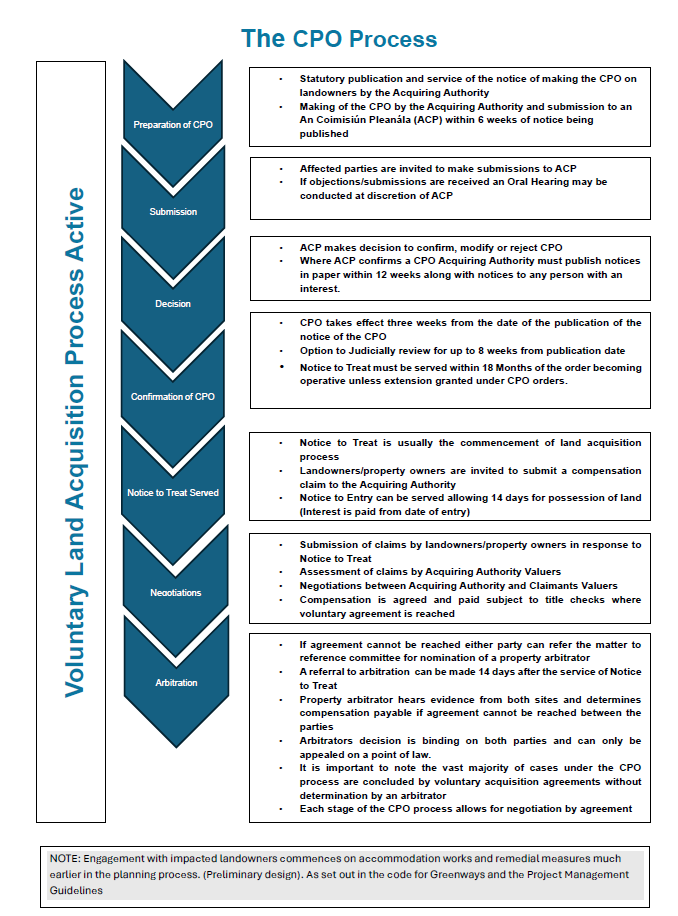
Is ann do CPO chun an t-údarás fála agus na húinéirí talún agus réadmhaoine araon a chosaint. Bíonn sé ag teastáil chun teideal a dhearbhú, plé le talamh neamhchláraithe agus chun infheistíocht phoiblí a chosaint. Dearadh é freisin chun a chinntiú go gcosnaítear cearta an úinéara talún maidir le cúiteamh cuí a fháil. Áirítear leis an bpróiseas ceart ceachtar den dá pháirtí an cheist a chur faoi bhráid breithnithe eadránaí. (Leagtar na céimeanna sa phróiseas CPO amach in Aguisín A.)
Chun athrú a dhéanamh ar an bpróiseas CPO, bheadh athrú le déanamh ar dhlí na hÉireann, rud atá lasmuigh de shainchúram BIÉ
Tá comhaontuithe ex-gratia i bhfeidhm ag BIÉ lena gceadaítear íocaíochtaí sa bhreis ar íocaíochtaí faoin bpróiseas CPO, is é sin:
- Íocaíocht cháilmheasa i dtaca le ceannach talún do thionscadail Bóithre Náisiúnta.
- Íocaíocht Inbhuanaitheachta faoin gCód Cleachtais do Ghlasbhealaí.
2.0 Bóithre Náisiúnta agus Úsáid CPO.
Bhí comhaontú seanbhunaithe ag BIÉ i dtaca le ceannach talún do scéimeanna Bóithre Náisiúnta. “Acquisition of Certain Lands for National Roads: Agreement between the Irish Farmers’ Association (IFA) Transport Infrastructure Ireland (TII) and the Department of Transport (DOT)”.
Cuireadh an comhaontú is déanaí i bhfeidhm ar feadh téarma sé bliana ón 1 Eanáir 2022 go dtí 31 Nollaig 2027. Íoctar íocaíocht sheasta dar luach €6,500 in aghaidh an acra le húinéirí talún faoi réir théarmaí an Chomhaontaithe, mar aitheantas ar chomhoibriú le linn phleanáil, dhearadh agus sheachadadh na scéime. Áirítear sa chomhaontú treoir agus forálacha soiléire i dtaca le:
- Oifigigh Idirchaidrimh Tionscadail (PLOnna) a cheapadh;
- rochtain ar thalamh chun críche réamhshuirbhéanna, íocaíochtaí d’oibreacha iniúchta láithreáin agus do thástáil sheandálaíoch sháiteach;
- socruithe ginearálta maidir le measúnú an chúitimh;
- próiseas réitigh díospóidí tríú páirtí mar rogha mhalartach ar an eadránaí maoine Stáit.
3.0 Glasbhealaí, CPO a úsáid chun Talamh a Fháil.
Tá tógáil talún do Ghlasbhealaí faoi rialú an Chóid Dea-Chleachtais do Ghlasbhealaí Náisiúnta & Réigiúnacha (an Cód), a comhaontaíodh agus a foilsíodh i mí na Nollag 2021.
D’fhorbair meitheal oibre é a bhí comhdhéanta d’Fheirmeoirí Aontaithe na hÉireann (IFA), Cumann Soláthróirí Bainne Uachtarlainne na hÉireann (ICMSA), Cumann Feirmeoirí Eallaigh agus Caorach na hÉireann (ICSA), an Roinn Forbartha Tuaithe agus Pobail, Spórt Éireann, Fáilte Éireann, an Roinn Iompair, Ionadaithe na nÚdarás Áitiúil agus BIÉ arna tacú ag cathaoirleach neamhspleách.
4.0 An Cód
- Soláthraítear faisnéis maidir le pleanáil, dearadh agus tógáil na nGlasbhealaí
- Tugtar forléargas ar na céimeanna agus ar na tacaíochtaí atá ábhartha don chomhairliúchán
- Éilítear an breithniú tosaigh ar thailte stáit
- Éilítear ceapadh Agranamaí Tionscadail ag céim luath den fhorbairt tionscadail.
- Déantar foráil maidir le Comhairleoirí neamhspleácha Agranamaíochta agus Maoine a bheith ar fáil d’úinéirí talún aonair
- Déantar foráil maidir le Próiseas Fála Talún Deonach lena n-áirítear an Íocaíocht Inbhuanaitheachta Glasbhealaigh
- Déantar foráil maidir le Próiseas Réitigh Díospóidí Malartach mar rogha eile ar Eadráin Reachtúil.
Íoctar na híocaíochtaí Inbhuanaitheachta a chomhaontaítear faoin gCód ina 2 gcéim.
- Luathshíniú ar Íocaíocht – tá feidhm aige i gcás ina gcomhaontaítear Comhaontú Deonach um Fháil Talún (VLAA) sula ndéanann an t-údarás pleanála a chinneadh agus tá sé iníoctha tar éis an VLAA a fhorghníomhú;
- Íocaíocht Chomhair – Iníoctha nuair a osclaítear stráice ábhartha an Ghlasbhealaigh.
Maidir le CPOnna, leagtar amach sa Chód freisin gur trí chomhaontuithe deonacha atá an sásra tosaíochta chun talamh a fháil; mar sin féin, ceadaítear sásraí ceannaigh éigeantaigh, cé gur rogha dheireanach é sin chun a áirithiú go seachadfar bealach leanúnach. Faoi mar a dúirt mé níos luaithe, is minic a theastaíonn CPO chun deacrachtaí teidil a réiteach.
Leagtar amach sa Chód cur chuige comhoibríoch comhaontaithe chun Glasbhealaí Náisiúnta agus Réigiúnacha a sholáthar, arb é is aidhm dó toradh cothrom a bhaint amach d’úinéirí talún, do phobail áitiúla, do pháirtithe leasmhara agus d’úsáideoirí. Tá sé de dhualgas ar na páirtithe a d'aontaigh an Cód sin é a chur i bhfeidhm maidir le dul chun cinn agus seachadadh chlár na nGlasbhealaí.
5.0 Forbairtí Reatha
Aithníonn BIÉ an leibhéal imní ata léirithe ag úinéirí talún agus eagraíochtaí feirmeoireachta maidir le seachadadh chlár na nGlasbhealaí agus táimid ag obair leis an Roinn Iompair chun teacht ar chórais chun na bpróisis agus nósanna imeachta reatha a fheabhsú.
6.0 Athbhreithniú Straitéiseach
I mí Iúil 2018, d’fhoilsigh an Roinn Iompair, Turasóireachta agus Spóirt an “Straitéis d’Fhorbairt na nGlasbhealaí Náisiúnta agus Réigiúnacha Amach Anseo”.
Cuireann an Straitéis an creat ar fáil do sheachadadh Chlár na nGlasbhealaí Náisiúnta agus Réigiúnacha. Aithníonn an Roinn agus BIÉ go bhfuil gá leis an Straitéis a athbhreithniú agus a thabhairt cothrom le déanaí le linn 2026 agus chun aiseolas a lorg maidir le hoibriú agus cur chun feidhme na Straitéise agus an Chóid. Cheap an Roinn comhairleoirí le déanaí chun tabhairt faoin bpróiseas athbhreithnithe seo ar a son agus cuirfear tús leis an rannpháirtíocht le páirtithe leasmhara go luath. Síltear go ndéanfar Straitéis nua a fhorbairt agus a fhoilsiú le haghaidh comhairliúcháin in 2027. Déanfar athbhreithniú ar an gclár iomlán mar chuid den athbhreithniú ar an Straitéis. Déanfar tionscadail a mheas agus d’fhéadfaí an seachadadh a dhéanamh de réir a chéile bunaithe ar an leibhéal maoinithe atá ar fáil faoin bplean earnála do thréimhse 2026 go 2030.
7.0 Athbhreithniú ar an gCód
Bíonn an Cód faoi réir athbhreithnithe rialta ó na páirtithe a shínigh agus a chomhaontaigh an Cód. Leanann an próiseas seo i gcónaí. Bhí an cruinniú athbhreithnithe is déanaí maidir leis an gCód Dea-Chleachtais Glasbhealaí Náisiúnta agus Réigiúnacha ar siúl an 6 Márta 2026 agus beidh athbhreithniú eile ann roimh dheireadh 2026. Ina theannta sin, déanfaidh an t-athbhreithniú ar Straitéis na nGlasbhealaí, arna stiúradh ag an Roinn in 2026 le tacaíocht ó BIÉ, deis a chur ar fáil do pháirtithe ábhartha agus ar spéis leo é aiseolas a chur ar fáil ar oibriú agus ara chur i bhfeidhm an Chóid. Cuirfidh BIÉ an t-aiseolas seo san áireamh in athbhreithniú ar bith ina dhiaidh sin.
8.0 Caighdeáin
Ceapadh comhairleoirí chun athbhreithniú a dhéanamh ar na Caighdeáin do dhearadh agus tógáil na nGlasbhealaí le féachaint an féidir athruithe a dhéanamh chun críche an tionchar ar ghabháltas talún a laghdú agus ag an am céanna, oibriú agus tarraingteacht na n-áiseanna a chuirtear ar fáil a choimeád.
9.0 Míreanna eile
Tugtar aitheantas do cheisteanna imní a ardaíodh maidir le maoiniú agus íocaíochtaí cothabhála a bhaineann le glasbhealaí faoi leith, mar shampla, comhaontú sínithe luath Ghlasbhealach Chiarraí, agus tá siad á mbreithniú.
10.0 Tátal
Is é BIÉ an tÚdarás Formheasa do Bhóithre agus Glasbhealaí agus cuireann siad maoiniú agus tacaíocht ar fáil d’Údaráis Áitiúla maidir leis na cláir seo a sholáthar i gcomhréir le beartas an Rialtais. Cuireann an Gréasán Bóithre Náisiúnta bonneagar riachtanach iompair ar fáil do gach earnáil sa tsochaí. Éascaíonn an gréasán gluaiseacht daoine agus earraí agus raon leathan cuspóirí turais lena n-áirítear sláinte, oideachas, fostaíocht, turasóireacht agus rochtain ar phríomhsheirbhísí. Tá feabhsuithe ar an nGréasán riachtanach chun an nascacht agus fás réigiúnach a fheabhsú, an t-athbheochan uirbeach agus dlúthfhás a éascú, agus an tsábháilteacht agus éifeachtúlacht a fheabhsú do na húsáideoirí.
Feabhsaíonn Glasbhealaí an caighdeán saoil agus sláinte trí spásanna sábháilte, tarraingteacha a chur ar fáil i bpobail áitiúla a spreagann an ghluaiseacht laethúil, a laghdaíonn strus agus a chothaíonn ceangail shóisialta. Tacaíonn Glasbhealaí leis an athrú fadtéarmach ar iompraíocht trí chultúr siúil agus rothaíochta a chothú sna bailte agus sna sráidbhailte a nascann siad.
Déanann gnéithe dearaidh amhail dromchlaí cothroma, cosáin leathana agus fánaí réidh glasbhealaí inrochtana do chách agus cumasaíonn siad rochtain ar spásanna lasmuigh do dhaoine a bhféadfadh bacainní ar rannpháirtíocht bheith rompu murach sin, amhail daoine a bhfuil laguithe lúith acu, úsáideoirí níos sine, teaghlaigh agus iad sin atá ag teacht ar ais chuig an ngníomhaíocht i ndiaidh tinnis nó gortaithe.
Cuireann Glasbhealaí buntáistí suntasacha eacnamaíocha ar fáil freisin trí thurasóireacht, borradh faoin luach maoine, cruthú post agus fás gnó áitiúil. Tá tionchar eacnamaíoch bliantúil dar luach €5-8 milliún agus tréimhse aisíoca d’fhad ama 6 bliana á nginiúint ag samplaí amhail Glasbhealach Mór an Iarthair i gContae Mhaigh Eo.
Tá BIÉ tiomanta d’obair lenár gcomhpháirtithe sna hÚdaráis Áitiúla agus sa Roinn chun córais soláthair agus inghlacthacht na gclár arna mhaoiniú ag BIÉ a fheabhsú. Maidir leis na Glasbhealaí, tá an Roinn i ndiaidh tús a chur le hathbhreithniú ar Straitéis na nGlasbhealaí, rud a chuirfidh bonn eolais faoin gcomhthéacs beartais le haghaidh soláthair amach anseo. Déanfaidh an t-athbhreithniú seo aiseolas maidir leis an gCód Dea-Chleachtais do Ghlasbhealaí a chur i dtoll a chéile freisin agus cuirfidh sé bonn eolais faoi athbhreithniú ar an gCód.
Is próiseas seanbhunaithe atá daingnithe i ndlí na hÉireann é CPO. Tá rochtain ar phróiseas CPO riachtanach chun bonneagar leanúnach fadaimseartha bóthair agus glasbhealaigh a sholáthar agus chun luach na hinfheistíochta Stáit a chosaint. Is é aidhm an phróisis, comhréiteach a socraíodh trí idirbheartaíocht a bhaint amach agus an cúiteamh iomchuí a chur ar fáil. I ndeireadh na dála, tá an rogha ann tarchur chun eadrána mura bhfuil na páirtithe sásta fós. Tá athruithe ar reachtaíocht CPO lasmuigh de shainchúram BIÉ, ach mar sin féin, creideann BIÉ go diongbháilte go bhfuil sé riachtanach rogha a bheith ann chun talamh a fháil trí CPO chun soláthar bonneagair phoiblí a chumasú.
Aguisín A
Próiseas CPO