Mná a Chumasú chun Rothaíocht a Dhéanamh
Cuireann Mná a Chumasú chun Rothaíocht a Dhéanamh - Léargais thar Uimhreacha le taighde níos túisce Bhonneagar Iompair Éireann, Taisteal i mBróga Mná, agus tacaíonn sé go díreach leis na mianta mar a leagtar amach iad i Ráiteas Straitéise 2026-2030 BIÉ. Leagann an Straitéis treo soiléir síos don eagraíocht le béim láidir ar shábháilteacht, inbhuanaitheacht agus gníomhú ar son na haeráide, rochtain ionchuimsitheach ar an gcóras iompair, agus ardluach bhonneagar iompair an Stáit a bhaint amach. Athdhearbhaíonn sí gealltanas BIÉ bonneagar iompair ghníomhaigh a chur ar fáil chomh maith, lena n-áirítear Glasbhealaí agus an Gréasán Náisiúnta Raonta Rothar, mar pháirt d’aistriú níos leithne chuig córas iompair ísealcharbóin atá dírithe ar dhaoine.
Soláthartha trí Chlár Taighde BIÉ.
Helen Hughes - Stiúrthóir Seirbhísí Gairmiúla
Is toradh ghealltanas BIÉ do chinnteoireacht, taighde agus dea-chleachtas fianaisebhunaithe é an staidéar seo. Forbraíodh agus soláthraíodh é faoi cheann de Chláir Thaighde BIÉ dar teideal Glaonna Taighde Oscailte BIÉ. Tá tuilleadh cúlra leagtha amach i Straitéis Taighde BIÉ.
Trí úsáid a bhaint as taighde láidir le bonn eolais a chur faoi fhorbairt bheartais agus dearadh bonneagair, neartaíonn muid ár gcumas tacú le cuspóirí náisiúnta, dúshláin iompair a bhainistiú, athrú i dtreo modhanna taistil níos gníomhaí a spreagadh, agus deiseanna taistil níos sábháilte a chur ar fáil
Cuirim fáilte roimh an taighde seo agus molaim go mbainfear úsáid as torthaí an taighde chun bonn eolais a chur faoi fhorbairt leanúnach ghréasáin iompair na hÉireann..
Rachel Cahill - Ceannasaí na hOifige Feidhmiúcháin agus Inbhuanaitheachta
Le hathrú a spreagadh agus tionchar a imirt ar aistriú córa iompair, ní mór do ghníomhaireachtaí iompair amhail BIÉ, a bhfuil sé de dhualgas orthu bonneagar iompair inbhuanaithe a sholáthar, a thuiscint cén fáth a roghnaíonn daoine a modhanna taistil laethúla agus céard a theastóidh le go mbeadh daoine ag aistriú ón gcarr go modhanna níos inbhuanaithe, amhail iarnród éadrom, bus, siúl agus rothaíocht.
Cuireann an taighde léargais lárnacha agus tuiscint ar na bacainní a bhíonn roimh mhná nuair atá siad ag taisteal ar fáil mar aon le moltaí chun an rothaíocht a chur ar fáil mar rogha córa iompair do níos mó ban in Éirinn.

 Is minic a mheastar nach mbaineann inscne le cúrsaí iompair, ach ní hea. Féadann eispéiris agus riachtanais iompair agus taistil a bheith éagsúil do dhaoine difriúla le linn a saolré ar fad.
Cé gur féidir leis an gcuid is mó de mhná in Éirinn rothaíocht a dhéanamh agus go bhfuil rochtain acu ar rothar, tá seans níos mó nach roghnódh siad rothaíocht mar mhodh taistil laethúil. Tá tuiscint ar an mbearna seo ríthábhachtach chun úsáid an taistil ghníomhaigh a mhéadú, astaíochtaí iompair a laghdú, agus a chinntiú go seachadann infheistíochtaí i mbonneagar rothaíochta buntáistí don tsochaí uile.
Déantar monatóireacht ar athruithe inár gcóras iompair in Éirinn trí shuirbhéanna taistil agus sonraí cainníochtúla a bhailiú go rialta. Léiríonn sé seo dea-chleachtas agus cuireann sé bealach ar fáil dul chun cinn i dtreo cuspóirí agus beartais náisiúnta a thomhas, mar shampla léiríonn sraith an Innéacs Rothaíochta, a sheolann Walk Wheel Cycle Trust agus an tÚdarás Náisiúnta Iompair gach dhá bhliain, go soiléir go bhfuil líon na bhfear agus na mban in Éirinn a rothaíonn ag dul i méid i gcónaí inár gcathracha, rud a thaispeánann aistriú i dtreo soghluaisteacht inbhuanaithe.
Tá sé fós fíor nach mbíonn mná in Éirinn ag rothaíocht chomh minic céanna le fir, agus ní thuigeann muid i ndáiríre cén fáth a bhfuil an bhearna sin ann. Déanann an staidéar seo an treocht sin a scrúdú agus déanann sé níos mó ná díreach an cheist a chur cén fáth nach rothaíonn mná chomh minic le fir in Éirinn.
Tugann Mná a Chumasú chun Rothaíocht a Dhéanamh - Léargais thar Uimhreacha fianaise léirsteanach agus moltaí praiticiúla ar fáil chun bonn eolais a chur faoi sholáthar beartais, pleanála agus iompair atá infheidhme ar fud na hearnála iompair. Cuireann BIÉ fáilte roimh na torthaí agus moltar do lucht ceaptha beartas, lucht rothaíochta agus comhpháirtithe soláthair iad a úsáid. Tugann an taighde seo léargais uathúla a chabhróidh le cuspóirí iompair uileghabhálacha a bhaint amach agus is céim sa treo ceart é maidir le córais iompair atá sábháilte, inbhuanaithe agus ionchuimsitheach a chur ar fáil.
Céimeanna Tionscadail
Cuireadh taighde ar litríocht idirnáisiúnta agus Éireannach le chéile le fianaise cháilíochtúil nua agus dhomhain a bailíodh ó bhreis agus 1001 bean ar fud na hÉireann.
 Athbhreithniú ar chomhthéacs beartais reatha, rátaí rothaíochta in Éirinn i gcomparáid le tíortha eile, agus taighde reatha a léiríonn an fáth go bhfuil rátaí rothaíochta na mban níos lú ná rátaí na bhfear.
 Scaipthe i measc ban in Éirinn trí ardán Dynata le 1047 bhfreagra ó raon déimeagrafach agus tíreolaíoch ban.
 *Modh taighde cáilíochtúil a úsáideadh chun tuiscint a fháil ar “mheon na coise istigh” nó ar “eispéireas an úsáideora” trí agallaimh dhoimhne, dialanna taistil agus suirbhéanna.
 Workshops*
 *Cur chuige taighde comhoibríoch rannpháirtíoch agus ón mbun aníos ina ngineann an taighdeoir, páirtithe leasmhara agus úsáideoirí deiridh eolas, léargais agus moltaí le chéile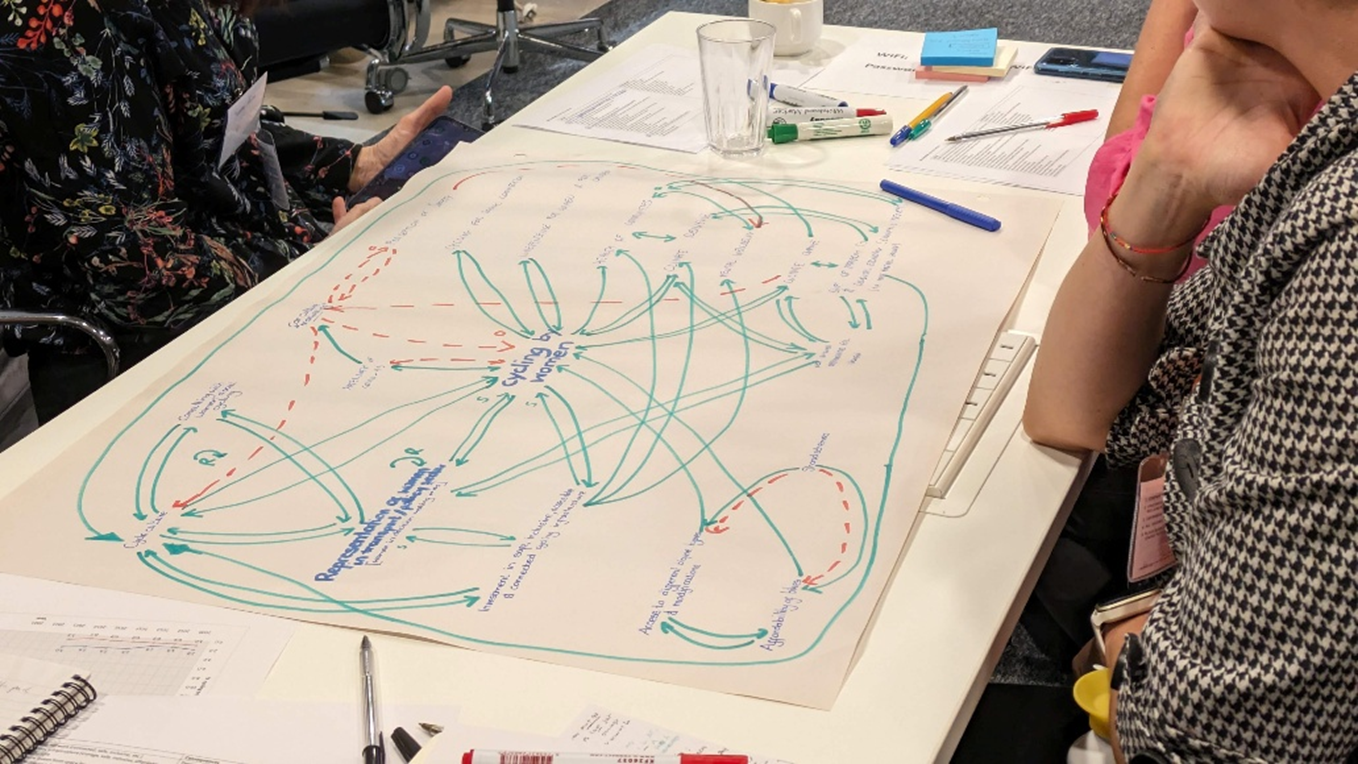
Trí fhíoreispéiris na mban a chur ag lár an staidéir, léiríonn an taighde ní hamháin go mbíonn tionchar ag caighdeán bonneagair ar chinntí rothaíochta, ach go mbíonn tionchar ag sábháilteacht agus slándáil phearsanta, dearcthaí cultúrtha, nascacht, brú ama agus ag tráth saoil orthu chomh maith.
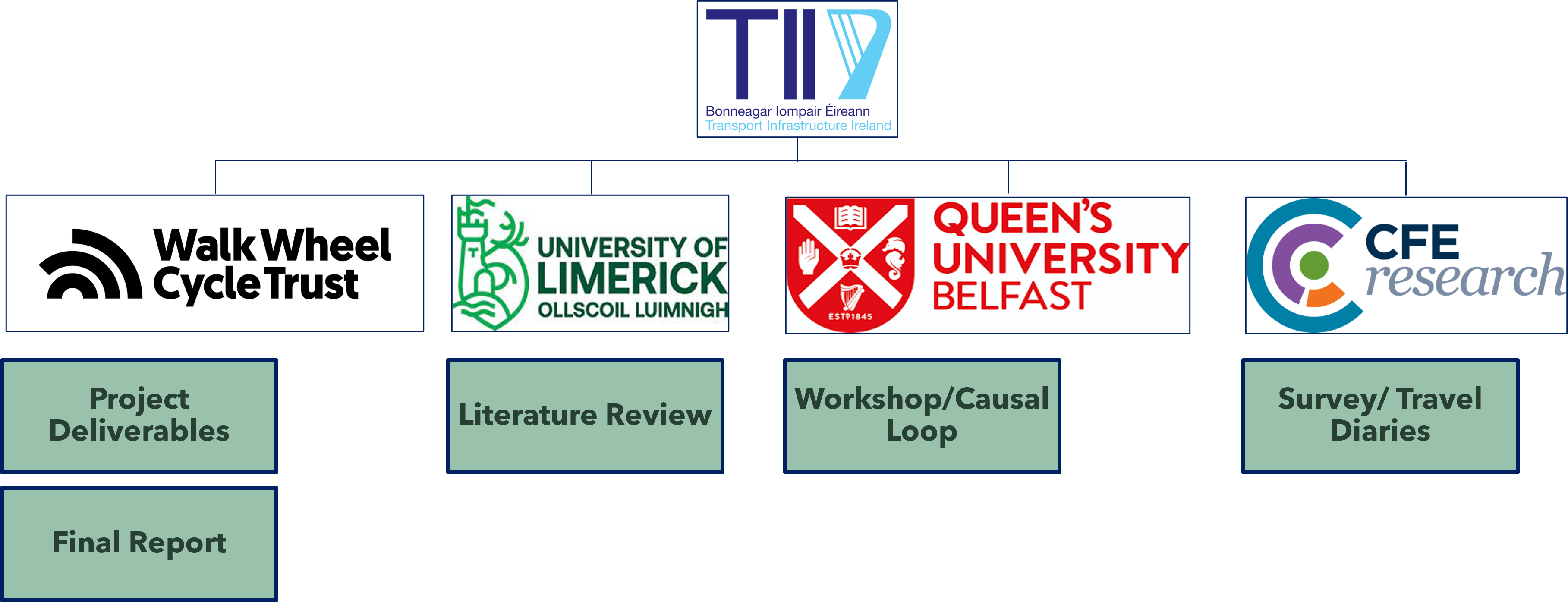
An Fhoireann Taighde
Príomhthorthaí an Taighde
Mná a Chumasú chun Rothaíocht a Dhéanamh - Léargais thar Uimhreacha - 3 phríomhchonclúid
- Tá sábháilteacht tábhachtach: Is sábháilteacht ar bhóithre agus sábháilteacht phearsanta is mó a chuireann bac ar níos mó ban a bheith ag rothaíocht.
- Tá fíoreispéiris na mban agus dualgais chúraim tábhachtach: De réir mar a théann daoine tríd an saol, is minic a athraíonn a riachtanais taistil ar bhealaí nach féidir leis an ngréasán iompair dul i ngleic leo. Ciallaíonn dearadh gréasán a oireann do mhná – go háirithe dóibh siúd a bhíonn ag taisteal le páistí, le daoine eile, nó ag tabhairt faoi aistir chasta gach lá – sráideanna agus bealaí níos sábháilte agus níos inrochtana do gach duine.
- Tá noirm agus dearcthaí cultúrtha tábhachtach: Déanann sochaí charrlárnach agus feiceálacht theoranta na mban i róil cheannaireachta san earnáil iompair na noirm maidir le roghnú modha a mhúnlú
Mná a Chumasú chun Rothaíocht a Dhéanamh – Léargais thar Uimhreacha – 3 mhodh le hathrú a chur i bhfeidhm tríd an obair a dhéanann BIÉ:
- Sábháilteacht: Fís Nialais a bhaint amach trí thacú le soláthar Straitéis maidir le Sábháilteacht ar Bhóithre Rialtas na hÉireann.
- Iompar a phleanáil a thacaíonn le patrúin taistil níos éagsúla: Glacadh le hUirlis 'Lionsa Inscne' BIÉ, m.sh. d’éirigh lena húsáid ar Luas Fhionnghlaise.
- An Cultúr a Athrú: aird a tharraingt ar na baic, dúshláin agus modhanna lena bhfeabhsú – Eolas a scaipeadh agus a chur chun cinn agus tacú le Tuarascáil Taighde EWTC.
- Siompóisiam Rothaíochta Cycling and Society: 09-10 Meán Fómhair 2024 Porto, an Phortaingéil - Sleamhnáin Chur i Láthair Na Comhdhála
- Coimisiún na hEorpa - Soghluaisteacht agus Iompar - Seimineár gréasáin le hAmbasadóirí don Éagsúlacht san Iompar 'Inclusive Policy and Planning' 11 Deireadh Fómhair 2024 – 'Gender Considerations in Transport: Public Transport and Active Travel Projects' – Nasc an tSeimeanáir Ghréasáin.
- Réimse Taighde Iompair (TRA), Baile Átha Cliath 15-18 Aibreán 2024. Páipéar agus Cur i Láthair na Comhdhála.
- Transport Transitions: Advancing Sustainable and Inclusive Mobility (2025) Proceedings of the 10th TRA Conference,2024, Dublin, Ireland. Volume 1: Safe and Equitable Transport
Is é Luas Fhionnghlaise an chéad tionscadal iompair phoiblí in Éirinn a ghlac le hUirlis 'Lionsa Inscne' BIÉ chuig céim an dearaidh. Aithníodh é seo sa tuarascáil orduithe iarnróid don tionscadal.
In Ordú Iarnróid Luas Fhionnghlaise, ‘Cuirtear dúshláin dearaidh san áireamh chomh maith, amhail riachtanais soghluaisteachta ar leith agus ábhair imní ban. Baineadh úsáid as staidéir bhreithnithe Jan Gehl mar fhoinsí sonraí agus léargais luachmhara chun bonn eolais a chur faoi leagan amach deiridh stadanna, rud a chinntigh go mbeadh dearadh spásanna poiblí agus córas an iarnróid éadroim sábháilte, ionchuimsitheach, agus freagrúil do riachtanais an phobail,’ de réir an Choimisiúin Pleanála.
Foghlaim Tuilleadh